

A passionate observer of variable stars and a runner of long miles
Each star had cost an effort. For each there had been planning, watching and anticipation. Each one recalled to me a place, a time, a season. Each one now has a personality. The stars, in short, had become my stars.
Leslie C. Peltier
He was captivated by the view of the Orion constellation from his window, but it was variable stars that became the focus of his lifelong interest. He began observing them at the age of sixteen, always with whatever instrument he had at hand. He was fascinated by those “tiny changing lights”, and especially by how much they could reveal. He became one of the most productive variable star observers in Central Europe, for whom even a hundred clear nights in Slovakia are not enough. He decided to relocate to Andalusia in Spain for better skies, where he now offers telescope hosting to Slovak amateurs. An amateur astronomer with an excellent detector in his head — Pavol A. Dubovský.
You are the most prolific visual observer of variable stars in Slovakia, and many know you by the nickname “Amigo.” You use the name Pavol A. Dubovský. How did you get that nickname?
The nickname is connected to my fondness for the Spanish language. It originated back in high school and stuck quite well. That’s why I write the “A.” between my first and last name.
What was your first encounter with astronomy?
In childhood. I remember the view from the window of my room, which faced east. I was mesmerized by constellation Orion. Back then, villages were lit in such a way that it was still possible to see it well.
So I started reading about stars, building telescopes, and eventually I started visiting local observatories. The first one was in Brno, but the one that influenced me the most was the observatory in Hlohovec. I still caught the era of Elemér Csere, attended the astronomy club led by Pavol Hazucha, and under the guidance of Vladimír Karlovský I worked on a high school project about the eclipsing binary EG Cephei.
What was it about variable stars that attracted you?
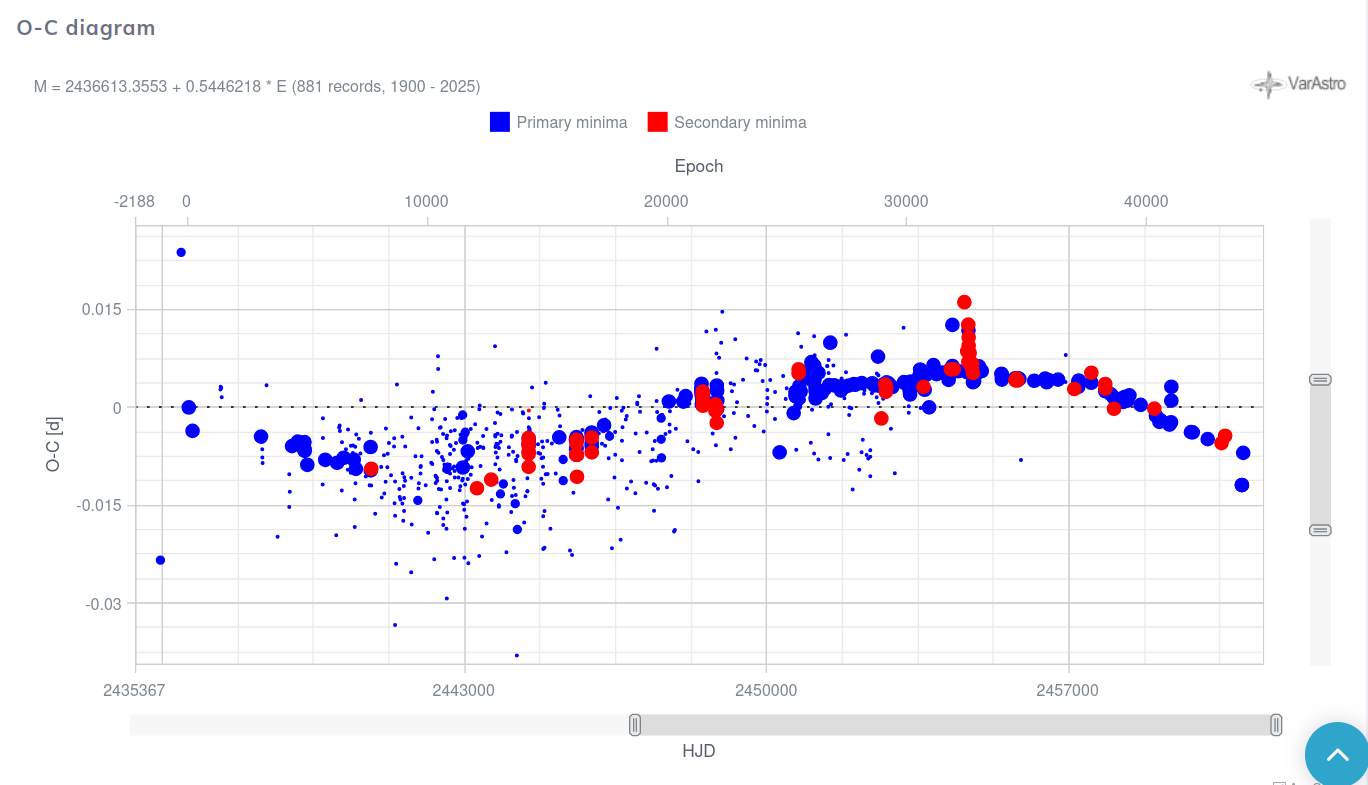
I was fascinated by variable stars from the very beginning. It was amazing to calculate the time of an eclipse from orbital elements and then actually observe it. And then to construct an O–C diagram of the minima and interpret it, for example, as evidence of a third body in the system. Something incredible. After all, in the telescope it’s just a faint little dot, and yet from relatively simple observations we can say so much about it. And this fascination has lasted to this day. Nowadays, observing methods are far more sophisticated, and what we can model about stars is much deeper as well.
Sometimes I wonder whether God intentionally gave us these changing little lights so we could understand the universe more easily. To be honest, deep sky observing never attracted me. Compared to the dynamic nature of variable stars, it felt boring. And paradoxically, what I focus on the most today are nebulae. But we’ll get to that.
You come from the small village of Rakovice near Piešťany, and the nearest observatory is in Hlohovec. Yet your first visit to an observatory was in Brno. Was it just a one time thing, since you later began visiting the Hlohovec observatory regularly? When was that?
I visited Brno often because part of my family lived there. I was even born in Brno. In 1983, while studying at the gymnasium in Piešťany, I read in the daily newspaper that Hlohovec had an interesting astronomy club. It caught my attention, so I started going there every Friday. The club leader, Pavol Hazucha, was an excellent teacher. But I remember being a bit disappointed that the other club members were more interested in the emerging computer technology of the time than in stars and astronomy.
You say you started building telescopes. Were you self taught?
Completely — but it ended with experiments using magnifying lenses… I quickly realized that factory made optics were better, but back then it was hard to get anything. I observed my first eclipsing binaries with a 5 cm “monar”, which my grandfather managed to salvage from the inventory of the Czechoslovak People’s Army. There are enthusiasts who enjoy building telescopes more than observing with them. They build one, test it, and immediately start a new project. I’m the opposite. I observe with whatever is available. You just need to adapt your observing program accordingly.
Your observing program became variable stars. At sixteen you began making visual estimates of eclipsing binaries. Did you already have observing experience, or did it all begin with your high school project?
It started a bit earlier. At that time, the Brno Observatory coordinated observations of eclipsing binaries — and in Slovakia, the Hlohovec observatory did as well. I sent my observations there, and that’s how I met V. Karlovský, who later supervised my high school project. I have a little anecdote related to EG Cephei. For visual observations, we used B.R.N.O. charts, usually prepared by the now legendary Jindřich Šilhán, who examined the field around the variable star and marked some nearby stars as comparison stars, labeled alphabetically in order of decreasing brightness. At that time, photometric data for stars fainter than magnitude 8 were not available. Years later, when the TYCHO 2 catalog became available, we checked the comparison stars for EG Cephei and discovered that two of them had been labeled in the wrong order. Despite that, observers collected large amounts of data, and the results are still usable. When everything is averaged, a clear O–C diagram emerges, indicating the presence of a third body in the system.
When you were deciding on a career, did you consider pursuing astronomy professionally?
Yes. At first it seemed completely out of reach, but in the end I chose to study physics at the Faculty of Mathematics and Physics at Comenius University in Bratislava. The choice of specialization came only in the third year, but that year they weren’t accepting students into astronomy, so I went into nuclear physics instead. In the end things took a different turn and I didn’t finish the degree, but I gained solid foundations. After that, for about half a year—until I left for compulsory military service—I worked at the observatory in Hlohovec. I returned to astronomy only years later, indirectly, as an amateur visual observer of variable stars.
Your departure for military service probably ended the first period of your visual estimates…
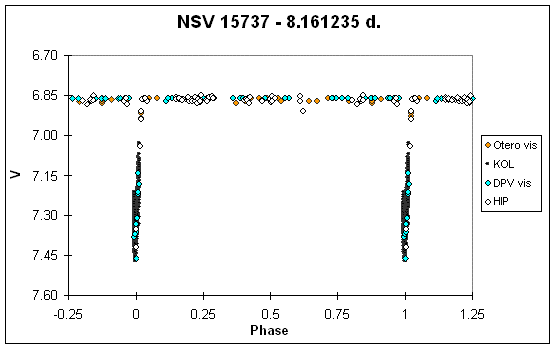
Exactly. The last eclipse timing observations I made during my work at the Hlohovec Observatory in 1989. But that’s not entirely the whole story. When I later began observing cataclysmic variables, Sebastián Otero pointed out that in the ASAS 3 survey data, or in Hipparcos data, there were some potential Algol type binaries. But there weren’t enough data to determine their periods. So he suggested that we observe them visually until we caught one during a minimum. And it actually worked. There is even a publication about it. The black points in the figure represent CCD photometry taken later in Kolonica to confirm the period.
After two years of military service, did you consider studying astronomy again?
Yes, I even enrolled again. But they placed me back into the first year, and compared to the turbulent social changes of the time, it felt boring. The year was 1991. So I focused on other things. Interestingly, during that one year I lived in the dormitory with Rudolf Gális, today the president of the Slovak Astronomical Society at the Slovak Academy of Sciences and the supervisor of the Variable Stars and Exoplanets Section, where I am the chairman.
So once again, you decided to leave university. Where did life take you, and what did you do for a living?
In the early 1990s, I became enthusiastic about the idea of Slovak independence. I was active in a nationally oriented youth organization. After that goal was achieved, I moved to the Orava region in 1996. This was connected to the fact that during the previous “patriotic” period I met an amazing person — Ján Sitek. He was, for a time, the Minister of Defense and later the mayor of the village of Podbiel in Orava.
In Podbiel, I founded the Science and Culture Center of Orava (VKCO). A small community of young astronomy enthusiasts formed around it, and together we established a local branch of the Slovak Union of Astronomers. We even built a small wooden observing shed — a modest structure that marked the beginning of the second phase of my visual observing. During my years in Podbiel, I made around 40,000 visual estimates of variable stars, while my professional life revolved around tourism. We operated a travel agency specializing in active tourism in Orava, offering stays in traditional wooden houses in the heritage reserve of Podbiel and rides on traditional wooden rafts.
So you returned to observing variable stars after eight years, in 1997, and it was Karol Petrík from the Hlohovec Observatory who brought you back to them. How did that happen?
As soon as Milan Kamenický finished my first Dobsonian telescope, I asked Karol what meaningful work I could do with a 20 cm Dobsonian. He gave me eight charts of cataclysmic variables. That was the key moment of my career as a visual observer. Observing eclipsing binaries visually no longer made sense, but watching for outbursts of dwarf novae still does — even today. And I’ve been observing them ever since — the original eight have grown to about 200 objects in my program.
Later you began using a more powerful Dobsonian. How did it come about?
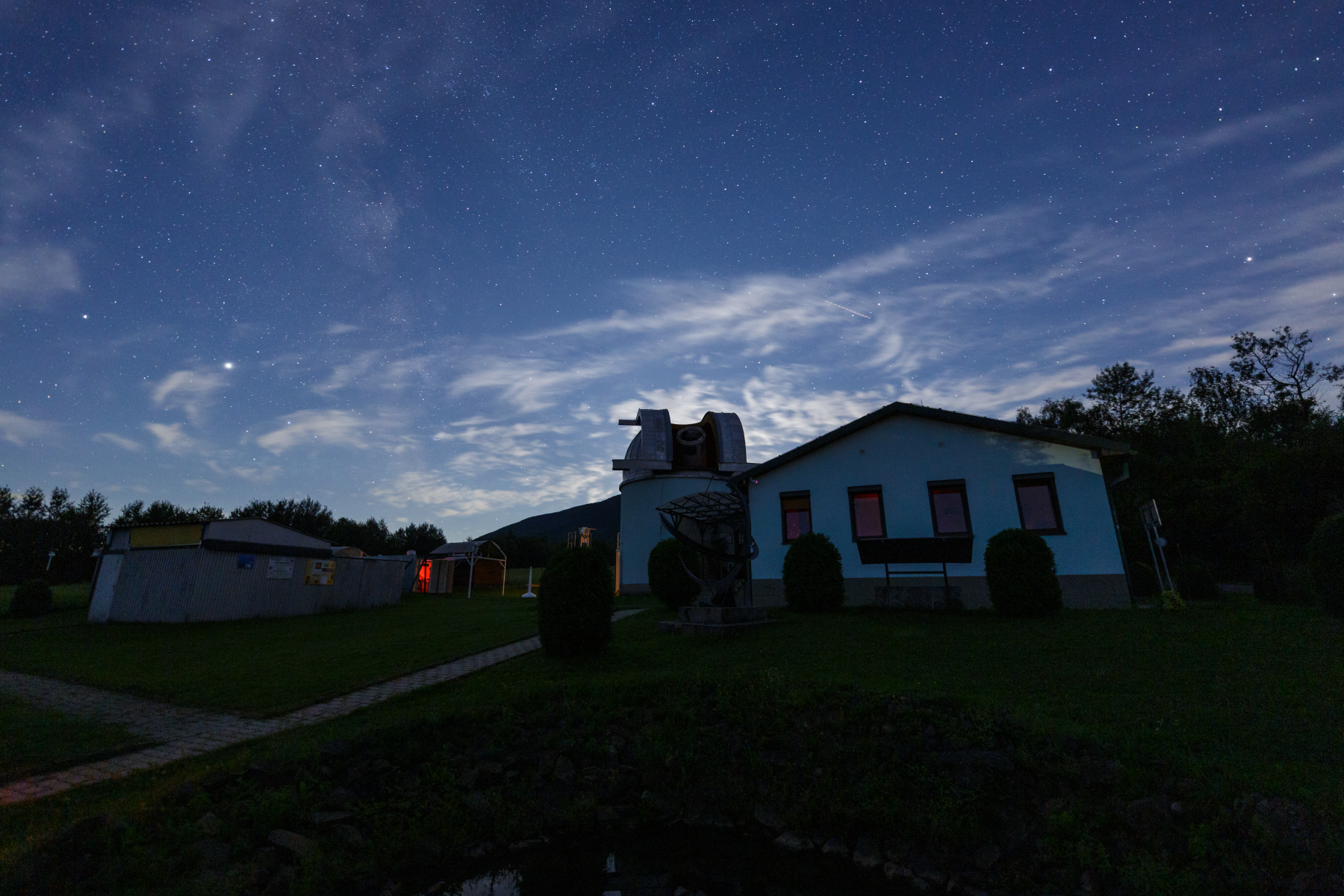
The 30 cm Dobsonian “Chermelin” was built in the early 2000s, using a mirror made in Odessa and homemade construction in Podbiel. It’s the telescope I used for most of my estimates, and now it stands in the garden in Kolonica, in a small shed we jokingly named TNO — the “Tramtarian National Observatory”.
For those who are not variable star observers, could you explain how a visual estimate of a star’s brightness is actually done?
There are several methods — the Argelander method, the Nijland–Blažko method, and others. All of them are based on comparing the observer’s psychological perception when looking at the variable star and at nearby stars whose brightness is constant and, ideally, whose magnitudes are known from electronic measurements. The actual measurement is essentially a linear interpolation between a brighter and a fainter comparison star. So it is a rather subjective process.
If the observer is not careful, they can measure nonsense. But if they have a good chart and manage to place the brightness between two comparison stars correctly, they won’t make a large error. Moreover, many visual observers produce a large number of estimates. When these are averaged, they yield a reasonable result. Worldwide, such observations are collected mainly in the international AAVSO database (American Association of Variable Star Observers). Even in the era of automated all sky surveys, these visual observations remain an irreplaceable source of information and are still used in new scientific publications.
After ten years in Podbiel, you moved on to the observatory at the Kolonica Saddle. You received an offer one simply doesn’t refuse…
In 2006, Igor Kudzej, the director of the Vihorlat Observatory in Humenné, approached me because he needed someone to operate what was then the largest telescope in Slovakia. I thought about it for about seven seconds. That’s how my fruitful, nearly twenty year period in Kolonica began.
What led to this offer? Had you known each other for a long time?
Yes, even while I was still in Podbiel, we were already taking part in expeditions to Kolonica. I attended several Variable workshops and astro practical sessions held there, and that’s where we got to know each other. We even completed one cross border project together. Igor also helped me obtain the mirror for my favorite 30 cm Dobsonian. Then came the invitation, and the “golden era” began. Igor handled everything I call the “dirty work” — meetings with politicians, dealing with authorities, securing funding, media appearances… I could calmly focus on observing, data processing, improving equipment, and projects.
You began working with the 1 meter telescope. Was it a big change compared to the instruments you had used before?
The Vihorlat National Telescope (VNT) is a unique instrument. So for anyone starting to observe with it, it would be a big change. I didn’t have much experience at the time, so I learned along the way. The telescope was built in the 1990s in Odessa with the idea that it would be used for photoelectric photometry of variable stars. So the first detector was a photoelectric detector. I had the opportunity to witness its completion directly by its creators, Nikolaj Dorokhov and Andrej Ryabov. It was also a unique device — a dual channel photometer. In a rather complicated way, the observer could simultaneously set the variable star and the comparison star, each on a different photomultiplier. Observing with it was quite a challenge, but we managed.
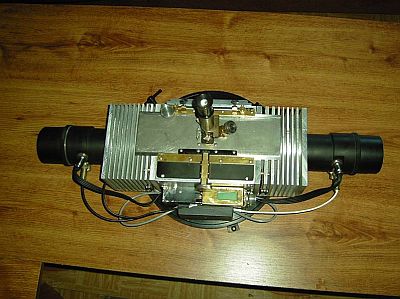
Soon, however, it became clear that CCD cameras were much more sensitive and, above all, more stable during long observing runs. The transition to CCD photometry was not easy either. The VNT has a focal length of 9 meters, so any CCD camera available at the time (2009) produced a tiny field of view. This is where Igor Kudzej’s abilities showed again — he secured funding for the FLI PL1001E camera, but even then the field of view was only 10 × 10 arcminutes. For observing intermediate polars, however, it was sufficient — the brightest ones are around magnitude 13, and there are always enough suitable comparison stars in the field. So we had both the telescope and an optimal observing program. It was supplemented as needed with observations of dwarf nova outbursts or active galactic nuclei.
Many people pursue astronomy simply for the joy of observing. You go beyond that — you collect scientific data. What do you consider the most valuable result of your work?
We amateur observers won’t change astronomy overnight, so I see my contribution more in quantity than in quality. ADS currently lists 175 papers in which I am a co author. I’ve already mentioned visual observations; the number of electronic light curves exceeds 10,000, and I have exactly 1,020 spectra. If I had to point to something more specific, we don’t need to go far back. Two years after the outburst of Nova Cassiopeiae 2021, we discovered quasi periodic oscillations in its light curve — and they are still ongoing. Together with the team of Andrej Dobrotka from the Slovak University of Technology, we are working on explaining the phenomenon. So it’s not a finished result yet, but as an observer, I’m already happy that such a meaningful collaboration has begun.
During your time in Orava, alongside strict science, you also worked in tourism. Did you try something similar in Kolonica? After all, the nearby Dark Sky Park Poloniny practically invites the use of its high quality dark skies for astrotourism.
In general, the Poloniny region offers an excellent opportunity for the development of so called natural tourism — not mass tourism that damages the environment, but well designed, sustainable activities for specific target groups. Astrotourism fits perfectly into this. We worked on improving the observatory’s public programs, and this was reflected in the growing number of visitors — and in their quality. By that I mean that people arrived prepared, genuinely interested in the mysteries of the universe, and asking thoughtful questions. What I initially considered a necessary evil that stole time from professional observing gradually turned into pleasant, mutually enriching encounters. And of course, the observatory became an important player in regional development. A key factor in this success was authenticity — we could show visitors our own results, not just talk about what the Hubble Space Telescope discovered somewhere.
In 2021 you were elected chairman of the Variable Stars and Exoplanets Section. It was a recognition of your long-standing work. Were you surprised?
The position of chairman is not a reward. I was involved from the very beginning in the idea of creating joint sections of the Slovak Astronomical Society at the Slovak Academy of Sciences and the Slovak Astronomical Society. And the Variable Stars and Exoplanets Section somehow naturally “fell to me”, so it didn’t really surprise me. I think our section has generally fulfilled what was expected of it. Although compared to the major international organizations — such as AAVSO or the BAA Variable Star Section — we are in a different league. The proximity of the Variable Star and Exoplanet Section of the Czech Astronomical Society also plays a role. It would be pointless to duplicate some of their activities when our own members already participate in them.
How would you describe the Slovak variable star community compared to neighboring countries?
In one word — small. We have excellent professionals and a handful of amateurs. But those amateurs are truly top level. I’d like to highlight Martin Vrašťák here, who observes symbiotic stars in close collaboration with Augustín Skopal from the Astronomical Institute of the Slovak Academy of Sciences. And he builds all his equipment himself — mounts, telescopes including mirrors, even spectrographs. And I proudly count myself among the amateurs as well.
How much time do you currently spend on visual estimates during a night?
These days, less than before — about two hours per night. One estimate takes roughly two minutes. During my time in Orava I was an exclusively visual observer, spending entire nights at the eyepiece. My record was 250 estimates in a single night. I wouldn’t be able to manage that today. Visual observing has become more of a pleasant supplement to my work rather than its core.
Czech astronomer Kamil Hornoch was known for visual brightness estimates with a precision of 0.03 magnitudes. That’s incredible. Do you know what precision you yourself achieve?
Here it’s important to distinguish between precision and accuracy — English even has separate terms for them. An observer monitors a given star, for example a semiregular variable, over the course of a year and makes several dozen brightness estimates. These estimates have a certain scatter. You fit a curve through them — say, a sine wave — and the standard deviation of that fit tells you the precision of the measurements. And that can indeed be around 0.03 mag. It shows that the observer carefully followed the methodology, used the same telescope, the same magnification, the same comparison stars, and knew how to compensate for changing observing conditions, and so on.
But when we compare his results with CCD measurements in the Johnson V filter, we see an offset of several tenths of a magnitude. That’s the issue of accuracy. There can be several sources of such a systematic error, but one of them is fundamental: the spectral sensitivity of the human eye is different from the transmission curve of the Johnson V filter. Roughly speaking, in peripheral vision the eye’s maximum sensitivity lies around 510 nm, while the V filter peaks near 550 nm. That is a significant difference. As a result, an observer sees red stars fainter and blue stars brighter than a CCD camera with a V filter. But that’s not the whole story!
There is also a difference between using peripheral vision and direct vision — in other words, which receptors on the retina we engage. Brighter stars, which we subconsciously catch with central, direct vision, behave differently from faint ones. And that’s not all: the brightness of the background also plays a role. Under moonlight, when the sky background is bright, red stars stand out more clearly.
Various authors have tried to find empirical formulas to convert visual estimates into the Johnson V band. But I liked the strategy proposed by the Argentinian observer Sebastián Otero (who later became a key contributor to the Variable Star Index). His idea is based on the fact that the peak spectral sensitivity of direct vision is practically the same as the peak of the V filter. So if we observe stars in a way that forces us to use direct vision, no conversion is needed. It’s not entirely simple, of course — under low light levels, the rods in the peripheral retina always come into play. You have to “train” the eye to see comparison stars the way they appear on a V-band chart. It’s a kind of calibration of the eye.
For me, the goal was always to make my estimates as close to the V band as possible, to fill in light curves where CCD cameras were not observing. So, to return to your question — I’ve never done such an analysis of my own estimates. But perhaps I should.
The legendary Albert Jones from New Zealand made over 500,000 visual estimates. You made 40,000 in Orava, and by the end of 2025 you have 76,000 in total. Do you have a milestone you’d like to reach?
We shouldn’t treat it like a sport. But the number 100,000 is kind of calling to me — 😊
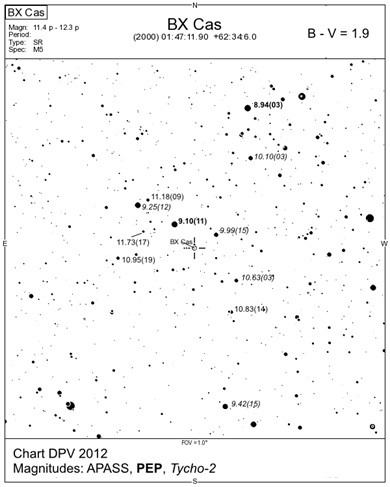
Albert Jones and Leslie Peltier were famous for knowing the fields around variable stars by heart. How about you? Did you need charts, or did you also carry them in your head?
I really do remember what the fields of the variable stars in my program look like. Only occasionally do I need to check the brightness of a comparison star. And I jokingly excuse this by saying that I can’t remember anything else anymore.
Did you have any influential figures among variable star observers?
Certainly. Among observers, I had the chance to meet the legendary Jindřich Šilhán, and I learned a great deal from the members of the Variable Star Section of the Czech Astronomical Society. Petr Sobotka, Luboš Brát, Ondřej Pejcha and others founded the Medúza group with the aim of visually observing long period variables. It was a groundbreaking step, because until then observers in Slovakia and the Czech Republic focused almost exclusively on timing minima of eclipsing binaries — something that lost much of its meaning with the rise of CCD technology. But the person who influenced me the most was the already mentioned Sebastián Otero. He showed me what an amazing detector we carry in our heads.
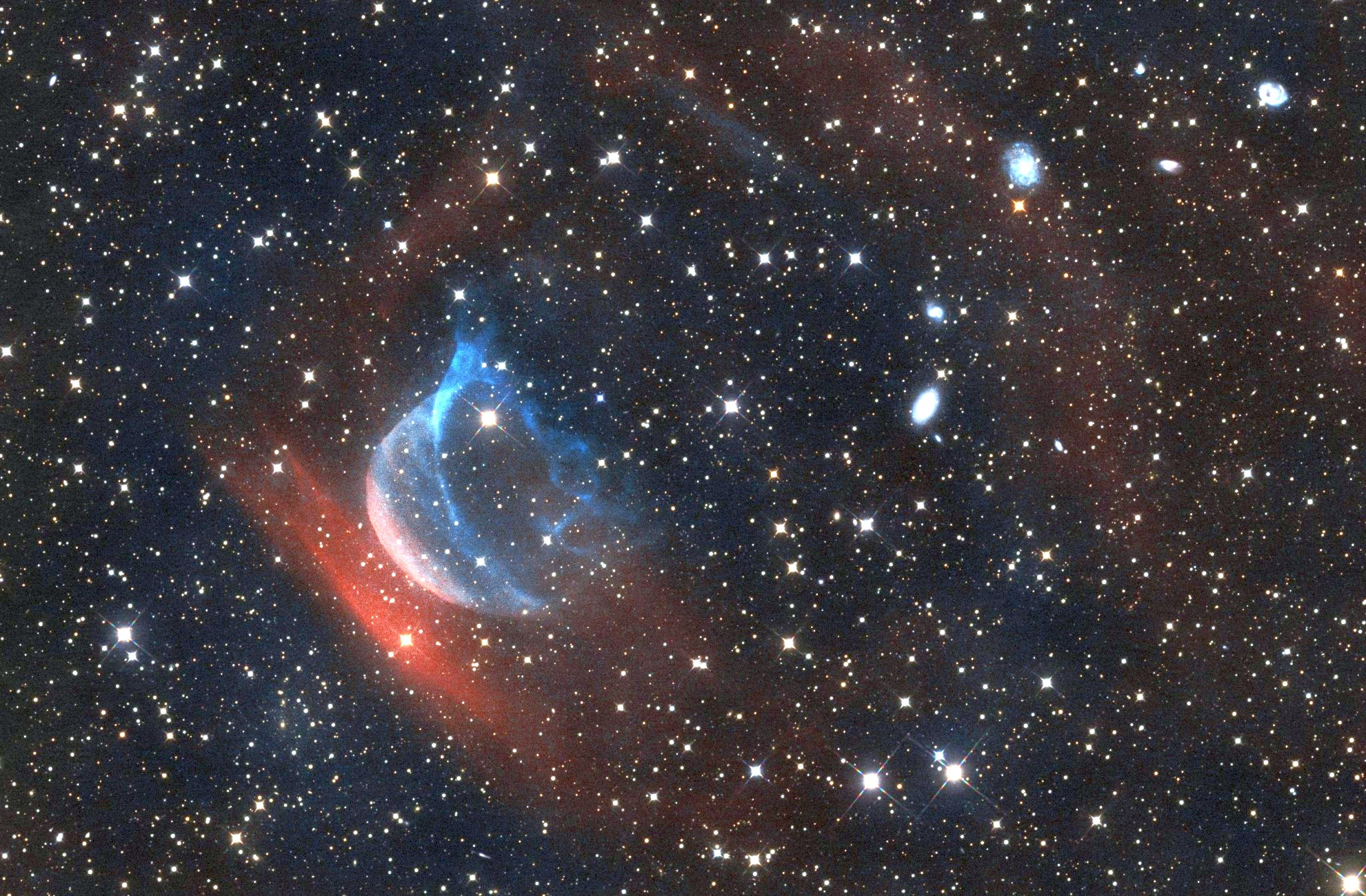
As for astrophysicists in general, I had the honor of meeting many at conferences. Besides all our Central European colleagues, I’ll mention two who played an important role. Ivan L. Andronov proposed the observing program for monitoring spin variations of intermediate polars. The one meter telescope at the Kolonica Saddle Observatory followed this program for 18 years, producing a unique dataset and many publications. The monitoring now continues with the 60 cm telescope in Hlohovec. The second name is Michael M. Shara. I met him at a conference in Prague in 2024, where he and his colleagues spoke about searching for faint nebulae they called ‘nova super-remnants’. I thought that our amateur astrophotographers could also produce such deep images capable of revealing faint diffuse objects. I asked him whether he thought it would be worthwhile to encourage amateurs to try this. I remember his exact words: ‘At first you won’t be able to discourage them.’ And that’s exactly what happened.
I want to highlight something important. All these great scientific personalities are humble people. I never encountered any condescension because I don’t have a degree in astronomy. On the contrary, they treated me as an equal partner.
The 2024 conference in Prague inspired you to involve Slovak astrophotographers in the search for nova super-remnants — the idea behind the HAF Collaboration. Were you satisfied with the first results?
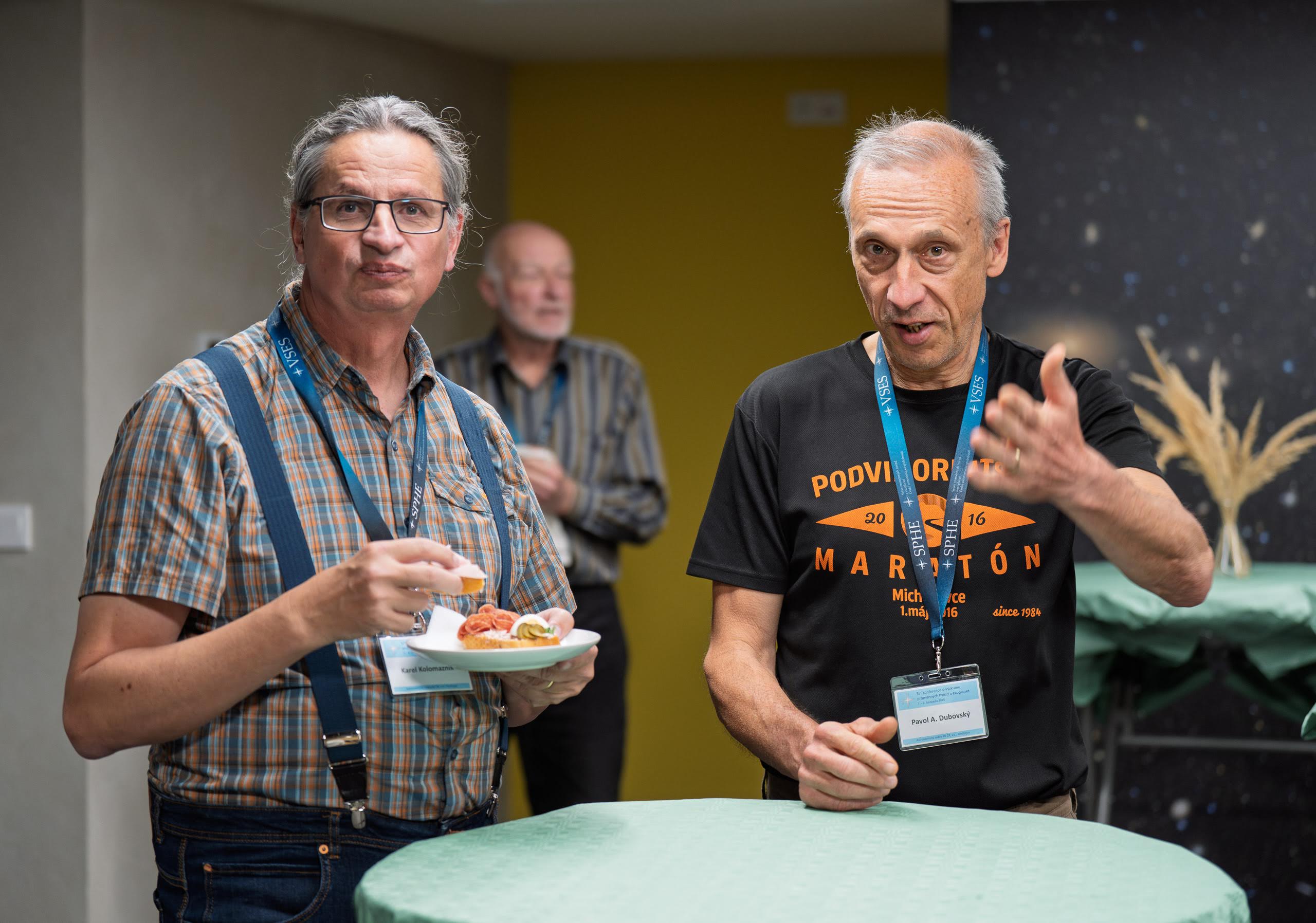
We really managed to show that by combining data from different telescopes, it’s possible to achieve excellent results — to reveal extremely faint extended objects. Drahoš Volný played a decisive role here; he found the right method for stacking the images. But the social dimension of the project is just as important. A strong community has formed, one with the potential to produce many more interesting results. And to be precise, one of the pillars of the campaign comes from the Czech Republic — the Moravian astrophotographer Karel Kolomazník.
Besides astronomy, you’re also known as an enthusiastic runner. When and how did you get into running?
I’ve always enjoyed running. But it wasn’t until my time in Orava that friends encouraged me to take part in actual races. And that really spoke to me. There’s a wonderful friendly atmosphere — and at the same time a healthy dose of competitiveness.
What does a completed marathon mean to you?
A marathon is a brilliantly designed distance. It’s not just two half marathons put together. Somewhere around 30–35 km you have to switch your body to burning fats. If you haven’t trained for that, you’re done — or at least you have to slow down. There’s no way to cheat it. It’s not like football, where someone gets lucky with one good shot and suddenly becomes the star of the match. In a marathon, the outcome is decided months before the start. The race itself is, from the outside, almost boring. The best result comes from steady, even pacing — no surges, no slowing down, no breakaways. Among us average runners, we usually know in advance the order in which we’ll probably finish.
How do you remember your first marathon?
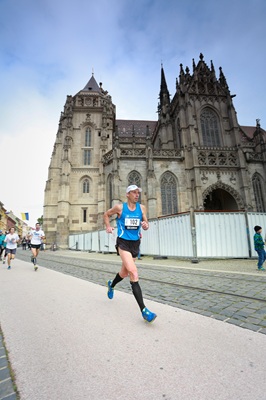
That was the Rajecký Marathon in 2003. I ran it cautiously, finishing in three and a half hours. But I really struggled — it was a hot day. It didn’t discourage me, though. Quite the opposite. Eventually I managed to get under three hours. That was ten years later, in 2013, just a week before my wedding.
You’re a regular participant in the oldest marathon in Europe, the Košice Peace Marathon. You’ve run it 16 times so far. What makes it so special to you?
The Košice Marathon is a true Slovak gem. It’s the oldest in Europe, with an excellent, fast course — and above all, amazing people who create a fantastic atmosphere for the runners. In a way, you just need to somehow get through the first 40 kilometers. Those last two along Hlavná Street… the crowd will carry you.
Let’s circle back to variable stars — do you remember your first visual estimate?
When it comes to eclipsing binaries, I actually had to look it up in my own archive. It was a minimum of EG Cephei on October 13, 1983, observed from Rakovice with the 5 cm refractor I mentioned earlier. I don’t remember many details beyond that. The beginning of my “cataclysmic” program can likewise be traced only through the AAVSO database. At the very start there is a negative observation of WZ Sagittae — on October 28, 1997 it was below my limiting magnitude. But the first program star I actually saw that evening was Z Camelopardalis, the well known prototype of the Z Cam class of cataclysmic variables. Every cataclysmic binary erupts as a nova from time to time. And here’s an interesting connection to the present: the surroundings of Z Camelopardalis were the first target of the HAF Collaboration campaign last year (2025). So the object that marked the beginning of my interest in cataclysmic variables reappeared years later in a completely different context.
Do visual estimates have a future? CCD photometry is a strong competitor…
Visual observations of variable stars are increasingly starting to resemble a sport — an uneven competition with automated all sky surveys. Yet it still happens that a visual observer catches an outburst before a survey does. One day visual observing will become unnecessary, but that day is not coming anytime soon. Just look at the huge constellations of satellites crossing the images of wide field detectors. They don’t bother a visual observer at all.
And then there’s the continuity of long term monitoring. Practically every analysis of a variable star cites the AAVSO database, which contains decades of visual observations. I’d also highlight bright stars — say up to magnitude 8, including those visible to the naked eye. These are typically saturated in survey images and therefore not measured.
The first robotic observatory, Fairborn Observatory, appeared as early as 1983, but commercial telescope hosting emerged only around 2005. You followed this development closely and even tested some of the systems yourself. In the end, you created your own amateur telescope hosting service in Kolonica. How did that come about?
Let me clarify the terminology first. People sometimes confuse robotic and automatic telescopes. A robotic telescope, as I understand it, is one that can operate for months without human intervention, selecting targets according to a predefined algorithm. An automatic telescope can independently perform a set of predetermined operations during a single night. In principle, any telescope capable of automatic operation could also function robotically — it’s just a matter of software and the reliability of all components. I never had the ambition to robotize an instrument. But to automate it — yes. That’s simply a response to the climate in Slovakia. Clear nights are rare, and when one finally comes, as many telescopes as possible should be working to collect as much data as they can.
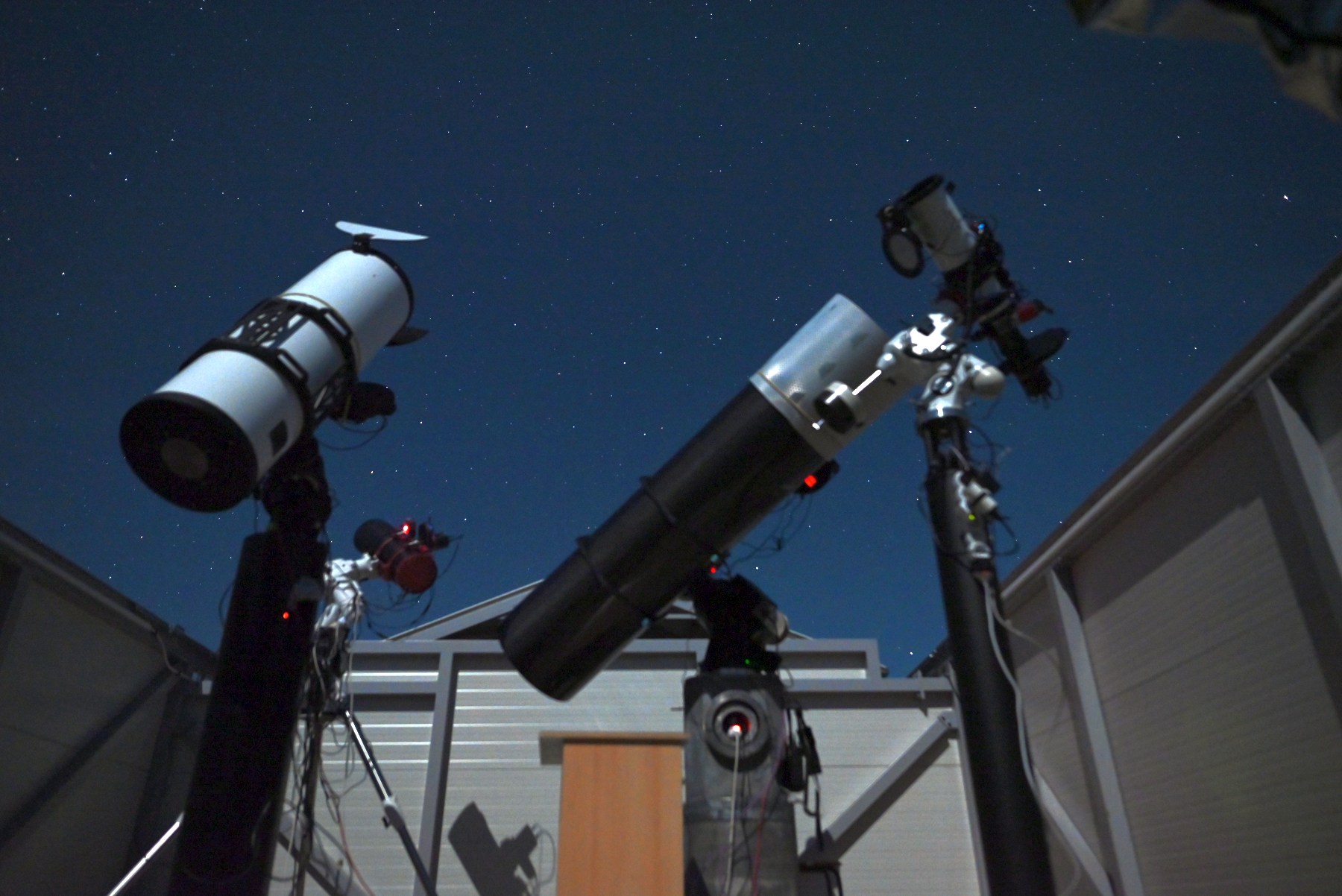
In Kolonica I routinely operated five or six telescopes. With unreliable equipment, that is physically and mentally exhausting. So I focused intensely on fine tuning each instrument. In the end, I managed to automate even spectroscopy to a large extent — everything except the one meter telescope. And since I didn’t want to be idle afterwards, we came up with the idea of offering hosting for amateur telescopes. That’s a joke, of course. The real motivation was that amateur astrophotographers kept coming to us for the dark skies, carrying their equipment back and forth. The logical solution was to place their gear permanently in a good location. At first we squeezed telescopes into existing observatories, but soon we secured funding for a dedicated astrophotography pavilion. It opened in the summer of 2024 and quickly filled with six telescopes. In addition, two more were remotely operated elsewhere on the observatory grounds. In my view, the Vihorlat Observatory was fulfilling its mission as a public institution exceptionally well. The paradox is that once everything finally worked, I left the observatory.
Was it easy to leave after so many years — and why did you decide to?
Of course, it wasn’t easy. I was emotionally attached to the observatory. But the new management had no understanding for my research activities — not even those that benefited amateur astronomers — and it became clear that involving the Vihorlat Observatory in the Slovak telescope hosting project in Andalusia, which I had been considering for some time, was completely out of the question.
Several colleagues left Kolonica along with you. Instruments without people are useless — will astronomical research continue there?
Probably yes. We place our hopes in Štefan Parimucha and his team from UPJŠ in Košice. The university already operates a 0.5 meter telescope on site, and Štefan regularly brings students there for short observing sessions. They could make good use of the existing equipment.
You’re currently finishing the construction of a telescope hosting facility in Andalusia, Spain. How did the idea arise, and what led you to pursue it?
The idea of operating telescopes under better observing conditions had been on my mind for a long time. I even tried to explore possibilities on Madeira, where I used to travel regularly. But the issue became urgent in connection with the HAF Collaboration campaign, which focuses on searching for faint nova super-remnants. Here in Slovakia, we simply cannot compete with those who have 250 clear nights a year when we barely reach 100.
If everything goes according to plan, the first telescopes could be installed right after the Easter holidays. You’ve also launched a public fundraising campaign, offering attractive rental prices for those interested in observing under a high quality sky. Do you believe there will be enough people interested in your services?
Yes, we moved quickly and efficiently, and we have strong support from the local amateur community in the village of Piconcillo. So this ambitious timeline still looks realistic. I say we, because I’m not working alone. On the website www.bombol.space you can find the entire team of collaborators who have embraced this bold idea. The crowdfunding campaign will help us as operators, but it will also benefit the clients themselves — among other things through more favorable pricing. Having enough interested users is the last thing I’m worried about. What I would like, however, is to give priority to those with scientific intentions — whether through photometric observations or, even better, spectroscopy. And of course, to those photographing extremely faint nebulae, especially participants of the HAF Collaboration campaign. We’re also in contact with the Deep Sky Collective, currently the most productive group in this field. So from the client’s perspective, it’s more a matter of first come, first served. I’d prefer not to keep increasing capacity endlessly. When other hosting services do that, the level of support tends to decline.
You mentioned that after your wedding you began to travel. Where did you go?
Not to many places, but we preferred staying longer rather than visiting more destinations. Mostly Madeira, then the Canary Islands, and mainland Portugal. For short breaks we head to big cities — Prague, Budapest, Rome, London, Porto — just to unwind a bit after spending long periods in nature.
Did you introduce your wife to astronomy, or was she already inclined toward it? I assume you’ve influenced your son in this direction as well…
My wife graduated from the Faculty of Mathematics and Physics at Comenius University, saying that I was the one who motivated her. But she had always been interested mainly in art. Only recently, when she got the opportunity to work at the observatory as an astrotourism manager within the project, did she become so enthusiastic about it that she started taking an interest in the more technical side of astronomy as well. To be honest, the observatory didn’t want her there anymore either. She’s now looking forward to developing her creativity in Andalusia. Our son is more interested in the technical side of things, especially software solutions. He hasn’t developed an interest in astrophysics yet, but he’s only ten.
Are you not tempted to explore astronomical sites around the world that offer even better skies than Andalusia?
Of course I am, but those places are generally quite uncomfortable for everyday life. And I want to have the telescopes close to where I live. For visual observing, I also want comfort — and ideally warmth. Just to give an example: the difference between a 30 cm and a 40 cm Dobsonian almost disappears when I can sit at the 30 cm, but have to stand at the 40 cm. And that’s not even mentioning the really big ones, where you have to climb a ladder. You lose time just going up and down.
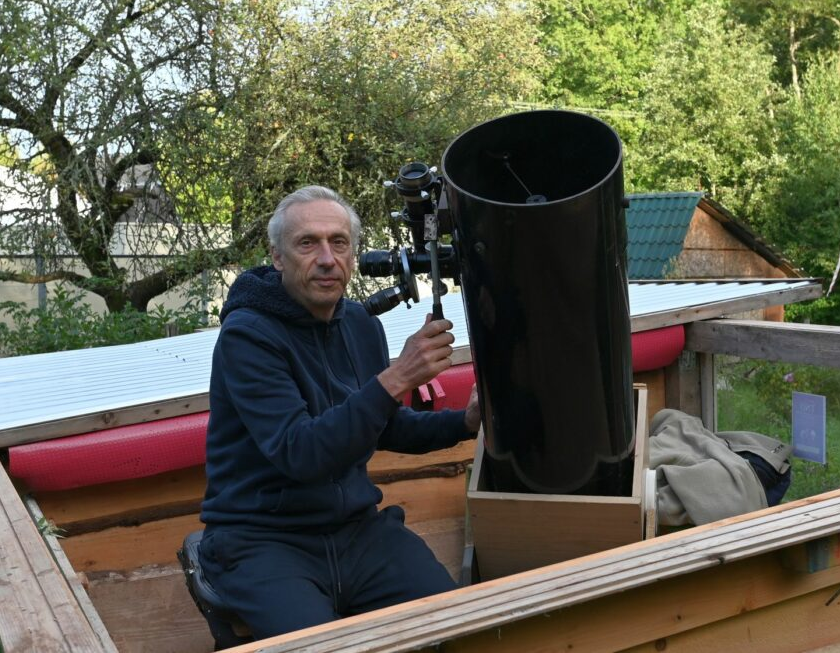
As the chief technician of the hosting facility, you’ll need to be present at the instruments. So you’ll soon be moving with your family to the village of Piconcillo, where the sky is darker and the number of clear nights is higher. Do you have an observing dream you couldn’t fulfill in Slovakia?
I’ve never really thought about it that way. Each of us is given certain talents, and we should use them for a good purpose. So I tend to see it more as an opportunity: by running a hosting service in Andalusia, I might help someone else fulfill their observing dreams. But of course, I’m looking forward to visual observing during warm nights. And I definitely want to do spectroscopy here as well, including workshops for amateurs and students. In a way, I owe that to the community. Last year’s Variable expedition in Kolonica was supposed to focus on spectroscopy — but it never happened.
Thank you for the interview, and I wish you many clear nights and great success with the telescope hosting project in Spain.